
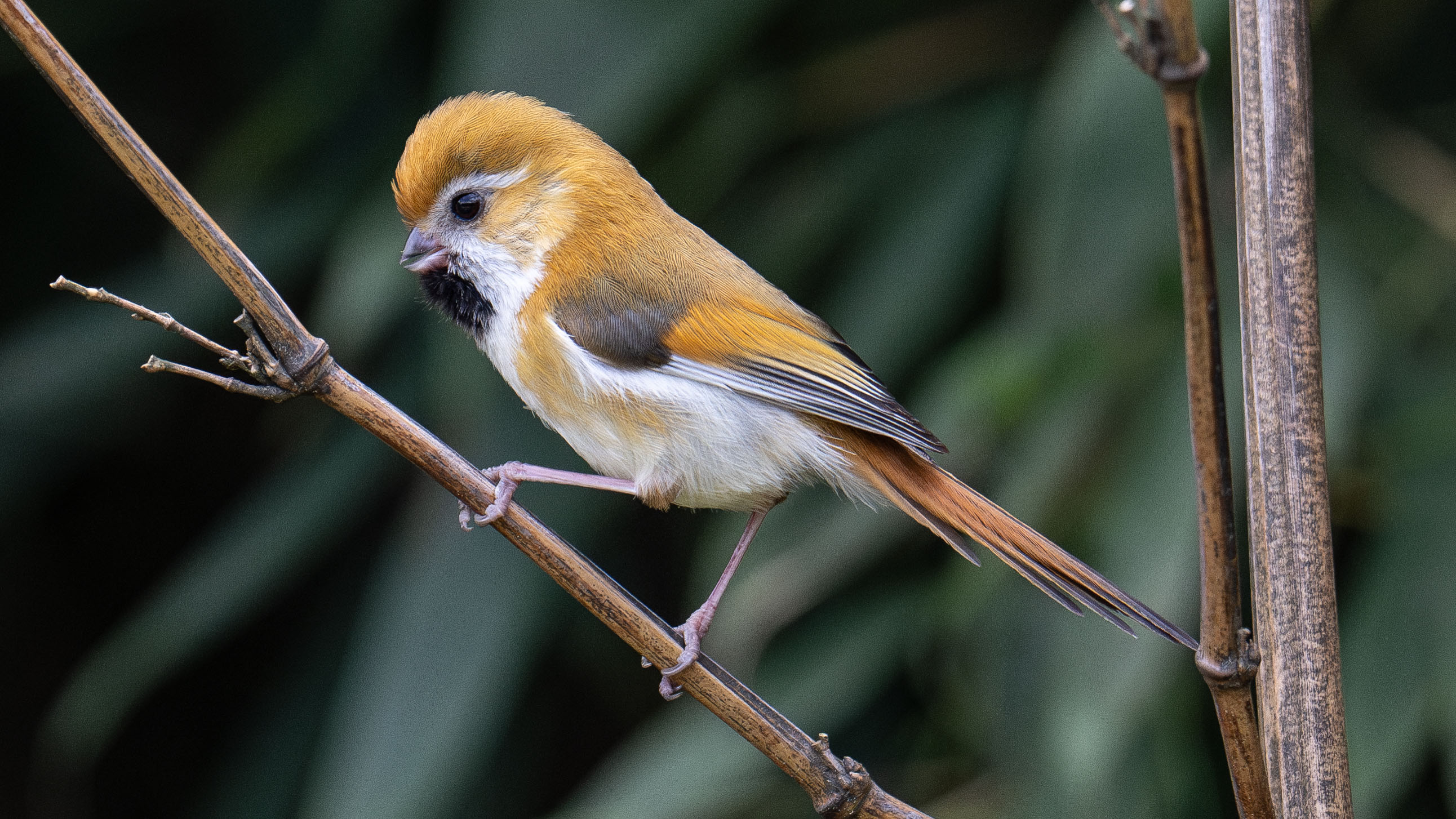
Some photos were taken from the hides, as declared in their captions.
I went to the hide of the Sichuan Partridge in Tanshi village with my friends Zhiyu and Junfeng. We arrived at noon on the April 27th and left by noon on the 28th. A few days earlier, the hide owners informed us that the Partridge had not shown up for about two weeks and was presumed to be incubating eggs, but it was too late to cancel the trip. We decided to try our luck.

We spent most of the time in the hides. On the afternoon of the 27th, we first visited hide No. 2, where we had the Silver Pheasants, a Temmick’s Tragophan, and Lady Amherst’s Pheasants. We heard Sichuan Partridge calling several times but had no luck seeing any.


Then we went to another hide where the owner feeds Gray-faced Liocichlas. There are also other babblers in the same hide. Golden Parrotbill and Golden-breasted Fulvetta might also be interesting for birders from other regions.


On the 28th, we spent the morning in another two hides, which were said to be better for the Sichuan Partridge. Generally, we had the same collection of birds as on the 27th. We had no luck seeing any Partridge. We got several Phylloscopus tephrocephalus at the road to the hide, about 1500 m in elevation, and saw and heard them very well. Also, one Russet Bush Warbler (Locustella mandelli) was singing nearby, and another L. chengi was singing about 60 m away for a short time.
We noted that many of the typical forests were replaced by bamboo. Our guide told us that, in the past, people logged trees and planted bamboo for bamboo shoots. This region thus lacks typical forest birds in this elevation. Still, it is full of birds that are very happy with a single and secondary growth of bamboo forests, like Lady Amherst’s Pheasant and Sichuan Partridge.

Chrysolophus amherstiae (白腹锦鸡, Lady Amherst’s Pheasant) young male. This photo was taken from the hide.


I got two lifers: Buffy Laughingthrush and Russet Bush Warbler. Many Lady Amherst’s Pheasants were calling everywhere and easily to be seen, also come to the hide. The tragopan was very tame to humans and could even come inside the hide. I was slightly disappointed with those birds in hide, though, as they didn’t look wild. Better luck next time for Sichuan Partridge!


For those who would like to visit the hide for the Partridge, try to avoid late April, May, and early June. These are times when the birds can be busy breeding and may not visit the hide. Another thing to mention is that the weather report there is unreliable. It said the two days we spent there should be heavily rainy, but most of the time, it was cloudy and then sunny.

I left Sichuan on the 29th. When my flight landed in the afternoon, I turned on my phone and then received a message from the hide owner:
“The Sichuan Partridge showed up today,” she said gladly, sending me a photo of the Partridge taken that day.
Me: 😅
eBird Trip Report: https://ebird.org/tripreport/227828.
Explore more about birds of East Asia:
Explore more about birds of Europe:
IJmuiden🇳🇱
Madrid🇪🇸

Leave a Reply